
Protect the living world in real time.
Our goal is environmental superintelligence: a system, directed by people, that senses, predicts, and helps protect the living world in real time. The first of it is at work inside industrial plants today.
The term
Environmental superintelligence, defined.
Environmental superintelligence (ESI) is information infrastructure, wielded by people and grounded in physics, that protects the living world by modeling and predicting it, in time to matter.
- Senses
- Reads what instruments, satellites, records, and people report about air, water, land, and life.
- Predicts
- Works out what it means and what happens next, with the physics built in and the law attached.
- Helps protect
- Puts that in front of the people with the authority to act, in time, inside the values and limits they set.
Today the working product does the first two for environmental professionals at industrial facilities, one plant at a time, and a person does the rest. The climb is the whole loop, for the whole living world.
01
Care has a speed limit.
Many environmental failures are not failures of caring. They are failures of care arriving too late. A leak is measured months after it starts. A permit is written for conditions that changed years ago. A report describes a river as it was, not as it is.
Damage moves continuously. Response moves in steps. The interval between the two is where the harm lives.
02
A larger self begins when a signal can cross the distance.
A cell protects itself with chemistry. A body protects itself with nerves. A community protects itself with speech, a civilization with writing and networks. Each larger self exists because a signal can cross it in time: a wound here, a response there.
The biosphere has never had that signal. The mesh that could carry it is being built now.
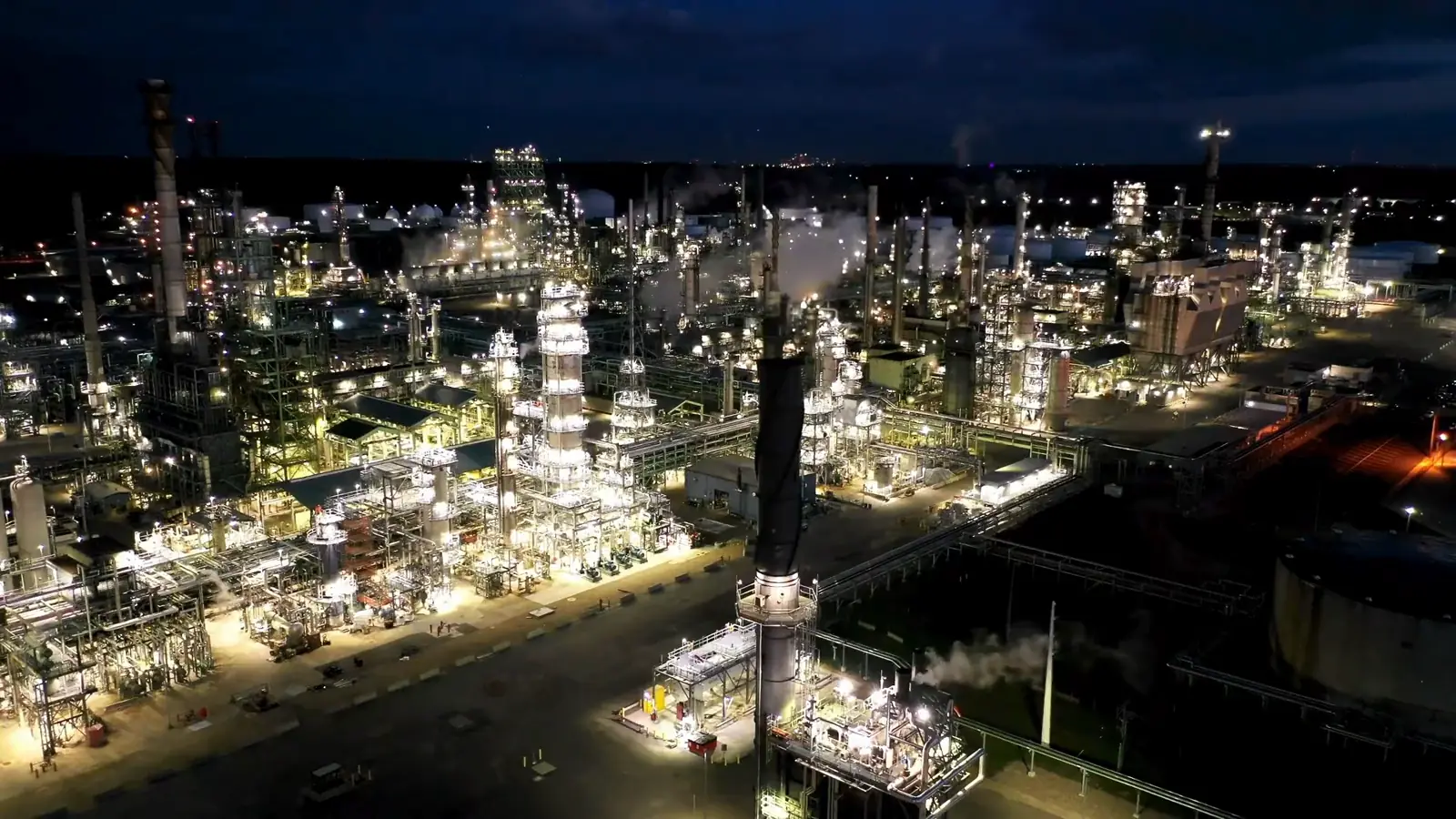
Where the first of it works: inside the fence, where the permit, the stacks, and the outfalls are real and the people who answer for them have names.
We started inside industrial plants on purpose. The legal limits that protect air and water live inside their permits, the measurements are already being taken, and the people who can fix a problem the day it is found work there. That is where a faster loop protects the most, soonest.
03
The planet can see. It cannot yet flinch.
Satellites, river gauges, ocean buoys, forest microphones, and people with phones: the planet is covered in senses. Valves, alarms, restoration crews, and responders: it has hands. What it does not have is the connection between them that fires in time. A river damaged far from any office sends nothing, unless something reads the gauge, the satellite, and the permit together and turns them into a decision, here, now.
Pieces of that connection exist in isolated systems: a tsunami warning network joins instruments, forecasts, and sirens. They are not yet a continuous, shared layer for the living world. Building that connection for one facility at a time, and then a region, is what EnviroAI does today. Building it for the living world is the climb.
04
Humans set the boundary. Machines close the loop.
Every protection system does the same four jobs: sense what is happening, work out what it means, decide what to do, and act. What has changed most across history is how fast that loop closes. Environmental law closes it in years. People with good tools close it in weeks. A system that closes it inside the window of harm changes what protection means.
That is the mission: close the loop faster than harm can spread, with people setting the values and the limits, and the machine working inside them. Today the machine does the sensing and the reading; the deciding and the acting stay with a person. Faster, authorized action inside those limits is research, not a shipped capability.
All of it is for this. A living world that can be heard above the paperwork, in time to matter.
Why build it. Three reasons of seven.
These three carry the most weight. The other four, and what each of the seven does and does not prove, are in the essay linked below.
-
1
Capacity
The living world can no longer be protected by human attention alone, and information is the resource that closes the gap.
Civilization changes the living world at machine speed and answers at the speed of paperwork. The distance between those two clocks is where the damage lives.
-
2
Influence
AI is becoming one of the most consequential forces in the biosphere's future, and nature is barely represented in the machine layer.
An optimizer consumes whatever it cannot see. The most powerful new optimizers on Earth cannot yet see nature.
-
3
Objective
Planetary environmental intelligence is being built anyway: fragmented, thin, and not protection-first. The open question is whose objective it inherits.
A planetary nervous system is already being assembled out of parts built for other purposes. Whoever founds it chooses what it will care about.
All seven, with what each does and does not prove: Why Build Environmental Superintelligence? (August 2026). The definition above, with its provenance: Environmental Superintelligence (June 2026).
The climb to environmental superintelligence
EnviroAI measures itself against a mountain. Each camp is a capability that works and is in use before the next one starts.
-
Camp 1 2018
EnviroAI's first environmental AI tool: it took one fifty-hour legal task down to three hours, and the first customer, one of the largest petrochemical companies in the world, signed the same year.
-
Camp 2 2022
A chatbot over the environmental record, launched in December 2022 on top of a search engine across the public environmental record.
-
Camp 3 2025
An environmental permit application package prepared end to end by an AI agent system, in October 2025, with every unconfirmed value marked and people reviewing it before submittal.
-
Next The LNM
The Large Nature Model in service: predictions of what air, water, and land will do next, tested against measurement, connected to the decisions people are required to make.
-
Summit 2045
Environmental superintelligence: a continuous system that senses, predicts, and helps protect the living world in real time, with people setting the values and the limits.
Live, in development, research.
What works today, what is being developed, and what remains research. Nothing moves left until it works and is in use.
Live today
- Sourced answers over the public environmental record and uploaded documents.
- Permit drafting, analysis, and deviation review with a person in the loop.
- Facility-level geospatial views down to each emission point.
- Agency submission tracking in near real time.
- 3D air dispersion modeling and submittal preparation (beta).
In development
- The Large Nature Model, first generation: the architecture is designed; the partners, data, and funding to build it are being assembled.
- Coverage beyond the current twenty states and two provinces.
- Continuous monitoring that compares live measurements with permitted limits as they happen.
Research
- The Nature Benchmark: open tests of prediction, source tracing, legal knowledge, and safe action, scored against measurement.
- Hybrid AI and quantum algorithm testing with QCORE at Montana State University.
- Nature-aligned AI safety: how a system learns the limits of living systems before it can act on them.
People set the limits. The machine works inside them.
A faster system with the wrong objective does not create care; it makes mistakes faster. So the boundary is fixed: humans decide what matters and what is off limits, the design rule is that every action is logged and traceable, and the accountable decision stays with a person. Speed goes inside that boundary, never around it.
Want to help build it?
Researchers, data holders, and operators who want their facilities to be the first to benefit: we want to hear from you.